Target setting process questions
Here we provide answers to common technical questions that companies have as they are going through the target-setting process.

If we wish to live in a nature-positive world, we need urgent and ambitious action by everyone.
In SBTN’s Initial Guidance for Business (2020), we introduced the Action Framework (AR3T). We call this AR3T because it is a general framework for company action:
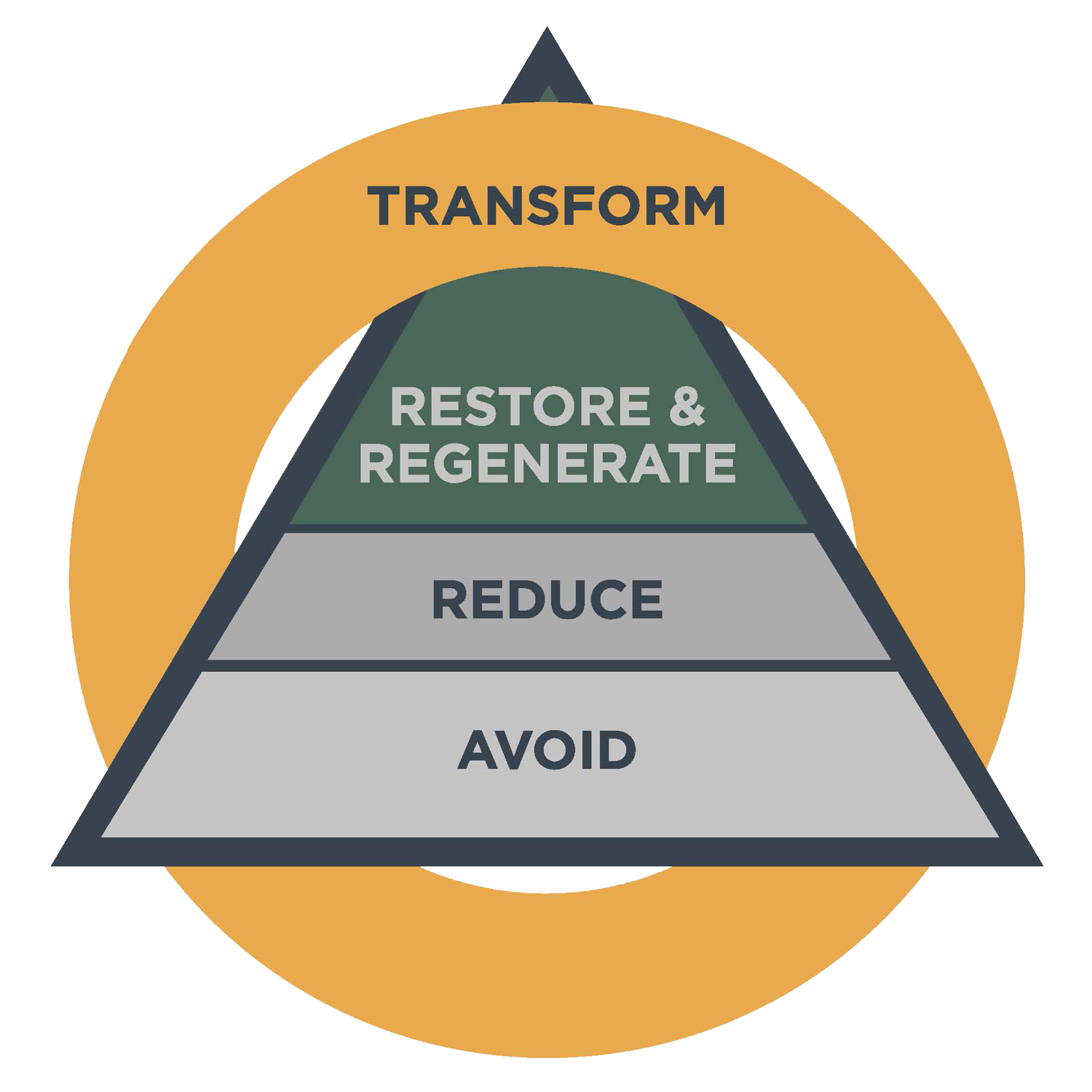
The AR3T framework was developed on the basis of the mitigation hierarchy, set out in the International Finance Corporation’s Performance Standard 6.
Use our interactive action framework below to see the types of actions companies can take when implementing science-based targets for nature.
SBTN offers three main resources to support companies with target implementation: technical guidance, a response options database, and a corporate action plan template.
Together, the Step 4: Act resources support companies to assess target implementation feasibility, develop action plans, and align their nature targets with wider company strategy and transition planning frameworks across nature and climate. Unlike Steps 1-3, Step 4 is deliberately non-prescriptive, since effective implementation varies by business model, geography, and governance. SBTN provides foundational guidance rather than defining or validating a single “right” approach, leaving room for company-specific innovation and adaptation to local context — with no new validation requirements.
The technical guidance provides recommendations on implementation safeguards (particularly focused on biodiversity and human rights), introduces and explains how to use the other Step 4 resources (the response option database and corporate action plan template), and explains linkages to emergent transition planning frameworks, such as TNFD.
The Response Options Database supports companies in rapidly identifying and selecting appropriate response options to implement science-based targets and mitigate the risk of unintended consequences for people and nature. In this context, “response options” refer to the actions a company could take to make progress toward achieving its targets— likely reflected in the target indicator – that result in improvements to the State of Nature.
These options span the SBTN Action Framework – from avoidance and reduction to regeneration, restoration, and transformation, and are intended to complement actions companies may already be taking.
For example, although companies can apply actions across the action framework:
Implementing the full framework helps companies reach their targets more effectively and generates positive, long-lasting changes in the landscape.
Companies can take both direct and indirect actions to meet corporate targets. For example, if a water quantity target requires a company to reduce water use by 90%, restoration activities in the basin – such as wetland restoration – may count toward the target.
The Corporate Action Plan template was co-developed with businesses to translate technical targets into practical implementation plans. The template is a structured planning tool for companies to develop and document their plans to achieve targets, integrating both commercial and impact-focused objectives.

Explore SBTN’s frequently asked questions to learn more about the plans for additional Step 4 resources and how they will relate to other frameworks, support collective action, build on the SBTN Action Framework, and more.
Step 4: Act Resources