Step Up for Nature Report
The Business Case for Science-Based Targets
The Science Based Targets Network (SBTN), Accountability Accelerator, and EBP have published a report titled Step Up for Nature: The Business Case for Science-Based Targets to summarize insights shared during interviews with 14 companies applying the SBTN framework.

“One year after the launch of SBTN’s Step Up for Nature initiative, this report stands as evidence of a growing collective of businesses choosing to lead. They recognise that nature is fundamental to the long-term health of our businesses, our societies, and our economies. ” Paul Polman
Business leader, investor, philanthropist

Corporate insights on the value of science-based targets for nature
Business leaders featured in the report say science-based targets for nature are giving companies greater confidence in where and how to act, sharpening decision-making and execution, strengthening credibility, and helping build resilience to emerging risks and expectations. Companies interviewed include:
- Arla Foods
- GSK
- H&M Group
- Holcim
- John Lewis Partnership
- Kering
- Kirin Holdings
- KLS Pureprint A/S
- Musholm A/S
- Orkla Foods Sverige
- Ørsted
- Seatopia
- Talawakelle Tea Estates PLC
- Tata Motors
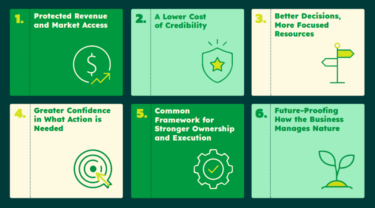
The report reveals six key areas of business value:

“What SBTN has added that is genuinely new is the basin-by-basin, context-specific framing. We are used to group-level consolidated targets, but the SBTN approach requires local stakeholder engagement, local hydrological models and site-level accountability. Over time, our conversations with investors have become more productive because it helps the market develop a more sophisticated understanding of what context-specific nature targets look like.” Antonio Carrillo
Vice President, Sustainability, Holcim

“SBTN has given us a clear framework to wrap around the work we have already been doing, and a valuable opportunity to make that work more concrete and more strategically integrated.” Leyla Ertur
Chief Sustainability Officer, H&M Group
“Our industry typically operates on the basis of large tenders or auctions, and the customer is government or a regulator acting under government. Having a biodiversity plan is increasingly becoming a requirement to be awarded a project, although it still varies from market to market. Our ability to speak credibly to that — with a validated methodology underpinning our claims — is very important.” Ingrid Reumart
Head of Global Stakeholder Relations, Ørsted

“SBTN has helped us understand what our strategic direction should be and what ‘good enough’ looks like. The way it addresses local context is especially valuable.” Anna Flysjö
Sustainability Lead, Arla Foods

“I think one of the most important messages from us is this: our business is based on nature. But nature is very complex to understand and difficult to define responsibilities for. SBTN helps address that complexity — it provides a common language and framework that can be shared across multiple functions within a company.” Yoshikawa Sosuke
Head of Environment, Kirin Holdings

“SBTN helped give us a credible, scientifically robust way to work with the data we had, understand where uncertainty remained, and explain our impacts and dependencies with confidence to senior leadership and other stakeholders.” Loraiza Davies
Nature Technical Lead, GSK

“First and foremost, we ensured strong engagement with our commercial teams, involving them as co-owners of the process and giving them the opportunity to shape the work from the outset. That created the foundation for meaningful engagement with suppliers, who are closest to the realities on the ground and are therefore critical to identifying practical solutions.” Ben Thomas
Senior Manager for Nature and Biodiversity, John Lewis Partnership

“Our impact on nature and biodiversity is not only what we do inside our operations — but it is also what others do to sustain our operations. Automotive supply chains are deeply tiered: tier one down to the extractive industries. And while we may take comfort that we are doing the right thing — we must hold ourselves accountable for other partners in our value chain too!” Jyotindran Sastabhavan
Chief Sustainability Officer, Tata Motors

“Because biodiversity is such a diverse and huge agenda, SBTN helps us find out which things are really important for us, where we impact the most, and what we should do.” Cecilia Isaksson Sajland
Director of Innovation and Sustainability, Orkla Foods Sverige
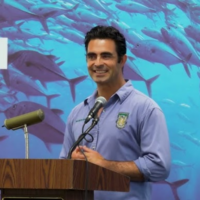
“For a startup at our stage, anything not directly contributing to growth or fundraising is a distraction. We are doing SBTN because we believe so strongly in our theory of change and want third-party validation of it.” James Arthur
Founder & CEO, Seatopia

“Through the SBTN process, we were able to look at our production through a clearer science-based lens. One important insight was that moving some production from more vulnerable coastal waters to more robust open-sea sites could reduce impacts on nature.” Teis Volstrup
Head of Public Affairs and Communication, Musholm
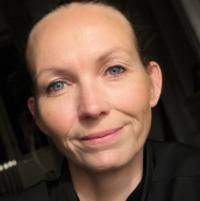
“The process gave us a clear guideline on where to start, which suppliers to focus on, and where the greatest opportunity for improvement lay.” Janni Toft Nielson
CEO, KLS Pureprint

“SBTN's prioritization process identified specific physical locations and actions to focus on first.” Krishna Ranagala
Sustainability Manager, Talawakelle Tea Estate

“The SBTN methodology is very useful as a common nomenclature for everyone, regardless of their sector. Its science-based approach enables all stakeholders to feel confident that it supports a strong pathway towards positive impacts and cuts through the confusion of too many competing ideas, or being overwhelmed by too much complexity.” Rachel Kolbe Semhoun
Head of Sustainable Sourcing and Nature Initiatives, Kering
The Step Up for Nature Report was co-produced by:



Explore case studies
Companies featured in the Step Up for Nature report tell their stories in more detail in these case studies: