
How do SBTs for nature help companies act on biodiversity?
Biodiversity loss is accelerating, with direct consequences for business performance. The loss of pollinators, soil degradation, overfishing, and deforestation can undermine yields, reduce the quality and reliability of key raw materials, and disrupt supply chains—driving higher costs, operational risk, and long-term resilience challenges.
For an increasing number of companies, the challenge is not recognizing the problem, but knowing how to act in ways that deliver real outcomes. Science-based targets for nature (SBTs), developed by the Science Based Targets Network (SBTN), are designed to bridge that gap. They translate complex ecological science into clear, time-bound action, showing companies how to reduce pressure on nature in the places that matter most—supporting global efforts to halt and reverse biodiversity loss.
The SBTN approach turns biodiversity loss from an abstract risk into concrete, decision-ready priorities for business—strengthening ecosystem recovery, operational resilience, and long-term value across operations and value chains.
In practice, SBTs for nature enable companies to act on biodiversity in five key ways:
1. Focus on key biodiversity pressures companies can control
Biodiversity is influenced by many human activities (known as ‘pressures’), including land conversion, freshwater use and pollution, overexploitation of species and climate change. For companies—especially large, multinational organizations—addressing all of these at once can feel overwhelming.
SBTN focuses on the most significant pressures driving biodiversity loss that companies can control or influence across their operations and value chains. By reducing these pressures in priority locations—where ecosystems and species are most at risk—companies can make measurable contributions to halting and reversing biodiversity loss, while improving their overall impacts on nature.
This pressure-based approach is essential: biodiversity cannot recover unless the underlying drivers of degradation are addressed.
2. Apply the mitigation hierarchy
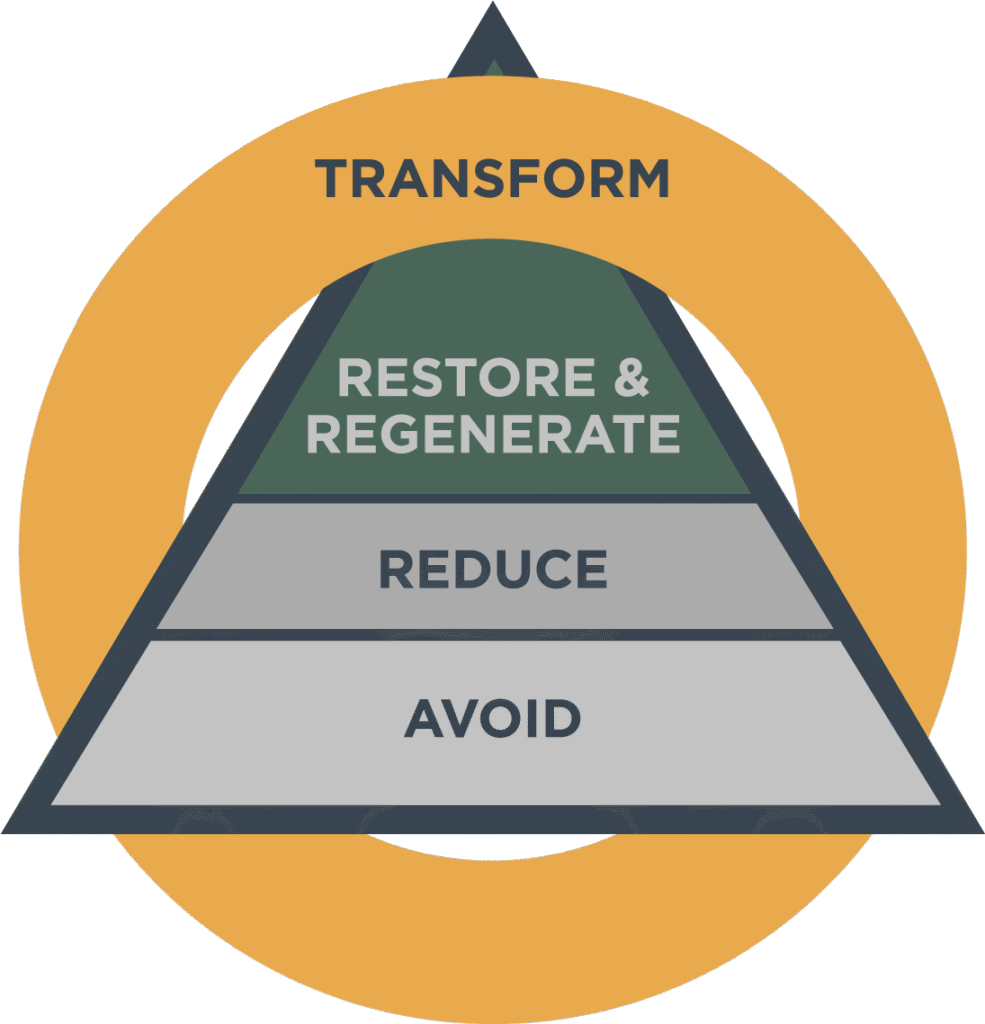
At the core of SBTN’s approach is the mitigation hierarchy—avoid, reduce, regenerate and restore. Avoiding and reducing harm comes first, creating the conditions for ecosystems to recover; restoration and regeneration then play a complementary role where appropriate.
Science-based targets for nature operationalizes this by requiring companies to prioritize avoiding and reducing the pressures they place on nature, before contributing to regenerative or restorative actions. In this way, SBTs help move companies beyond isolated projects toward a more credible, outcomes-focused contribution to nature-positive goals.
3. A structured, outcomes-oriented process
Science-based targets are not standalone commitments, they are part of a carefully developed, structured process that links assessment, target-setting and action. Through a step-by-step approach, companies assess their impacts and dependencies on nature, prioritize locations and pressures where risks to ecosystems are greatest, and set targets that are measurable, and time-bound.This process is designed to support real-world outcomes. By aligning company action with global goals such as the Kunming-Montreal Global Biodiversity Framework, SBTN helps ensure that corporate efforts contribute to broader landscape, basin and ocean ecosystem-level progress.
4. Translate science into practical guidance
SBTs for nature are grounded in the latest ecological science, including biodiversity metrics and ecological thresholds that define what nature needs to sustain and recover. SBTN translates this science into actionable guidance, helping companies understand how much to reduce, where action is most critical, and when it must happen.
This enables companies to take targeted, place-based actions—such as reducing water withdrawals in stressed basins or decreasing nutrient pollution—that support healthier ecosystems and more resilient natural systems. For example, GSK has set science-based targets for land and freshwater in its direct operations, including commitments to reduce water withdrawals in the Upper Godavari basin and restore degraded land to its pre-2020 state.
“Protecting nature is critical to safeguarding human health and building resilience in our supply chains. Taking a science-based approach helps translate that into real action.” — Claire Lund, VP Sustainability, GSK
5. Coordinate action across land, freshwater, ocean and climate
Biodiversity loss does not occur in isolation. SBTN’s guidance spans land, freshwater, and ocean and complements climate targets set through the Science Based Targets initiative (SBTi). This allows companies to develop coordinated strategies that manage interconnected risks, avoid unintended trade-offs, and strengthen resilience across their operations and value chains.
By embedding nature within an integrated business strategy, companies can act on biodiversity through multiple, reinforcing pathways—supporting ecosystems while strengthening long-term business performance. This reduces nature-related risks and capitalises on innovative new approaches which drive business competitiveness.